Showing posts with label history. Show all posts

Saturday, 30 May 2015

The Year in Books: May

This month we have a book on a slightly different topic, Toynbee Hall: The First Hundred Years by Asa Briggs and Anne Macartney.  For years I have seen references in various books to the settlement movement or university settlements, without truly understanding what they meant, so I went looking, which led me to Toynbee Hall and this book.


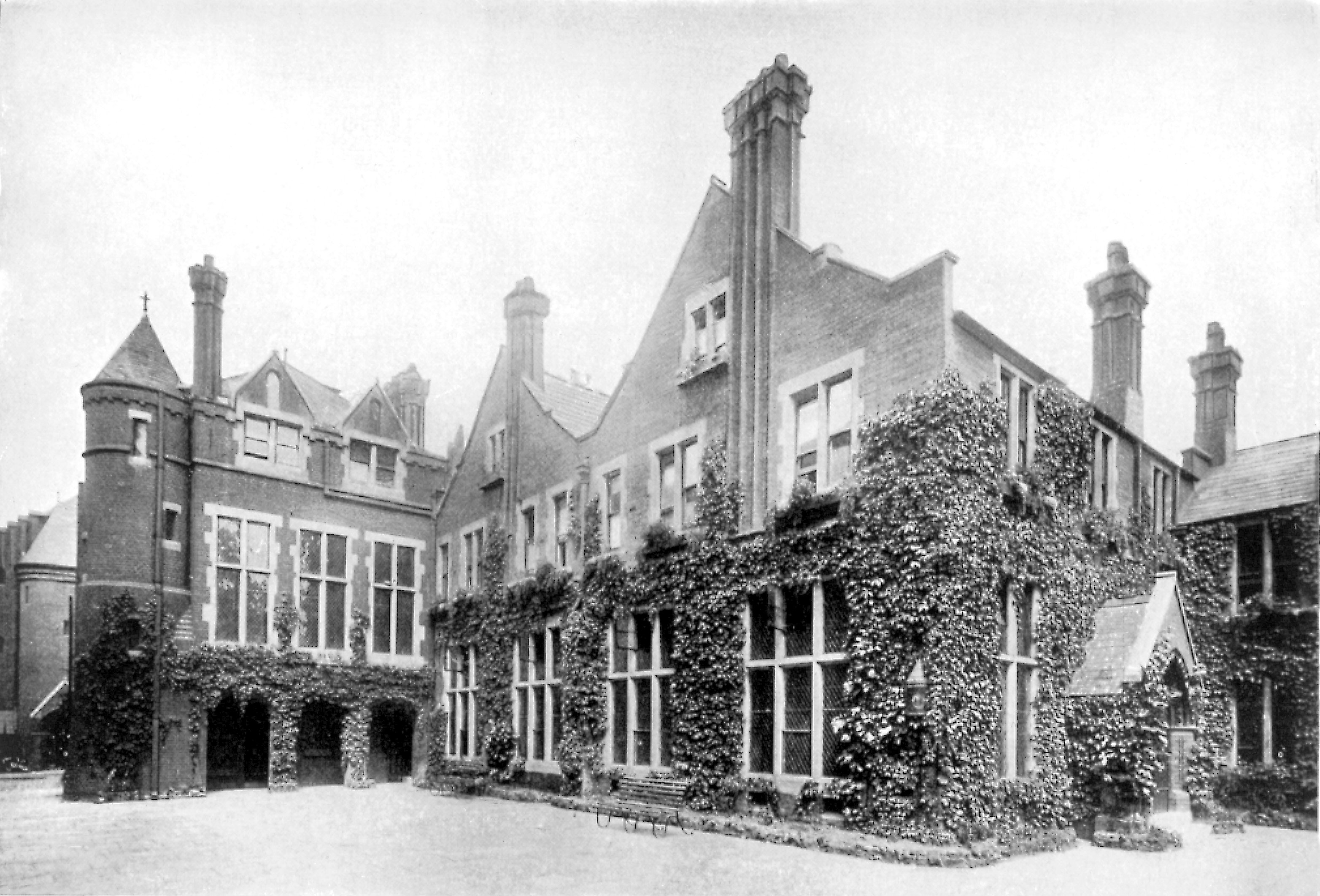
Toynbee Hall, in the east end of London, was established in 1884, named after an Oxford historian who had died the previous year.  In the 1880s there was a movement to address the poverty and appalling living conditions of many in the great cities.  Rev. Samuel Barnett, Toynbee Hall's founder had moved from a church in Mayfair to St Jude's, a derelict church in the east end in 1872 and it was here that Barnett and his wife Henrietta became drawn into community action.  The great idea of Toynbee Hall and the university settlement movement was to bring young undergraduates into the poorest communities to learn what life there was truly like, as a catalyst to change and to run schemes for education, welfare, better housing and even in time union organisation.

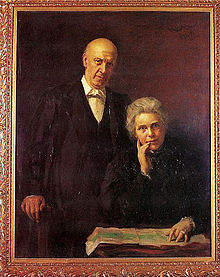
Samuel and Henrietta Barnett, painted by Hubert von Herkomer  
Barnett seems to have been determined to see his faith lead to practical action, he wished the people who came to the east end "to settle, that is, to learn as much as to teach, to receive as much as to give".  He wanted those making social policy to have knowledge of the problems faced by the people they were trying to help and his work had a huge impact.  Among people and projects he influenced were Cosmo Lang, later Archbishop of Canterbury, Charles Booth, who mapped London's poverty, future prime minister Asquith and William Beveridge, author of the eponymous report that led to the foundation of the NHS and welfare state.  Moreover for some men and women involvement in Toynbee Hall led to considerable social and educational advancement, the first scholarships for pupil teachers to go to Oxford or Cambridge were established in 1892.  While some involved in Toynbee Hall did very well such as J M Dent, bookbinder who became a publisher and established the Everyman series and Thomas Okey, a basket maker, who became first Professor of Italian at Cambridge.

I am not far through the book but already I find the breadth of the aims and vision of Toynbee Hall inspiring and slightly breath-taking.  Their work has a lot of relevance for today; sadly the problems they were tackling are still with us and getting worse, especially economic inequality.  It also makes me sad that these men and women fought so hard to get decent housing, health care etc. for all and we are now watching their work being dismantled or crippled by lack of funding.  So I would recommend this book as very readable and would commend it to any publisher who would consider republishing it.  Let us follow in their footsteps.

You can see the other entries for The Year in Books here
   

Friday, 28 November 2014

The Year in Books: November

This month's book, The Dreaming Suburb by R F Delderfield, is one set locally to wear I live, which is always a matter of great curiosity, to see a place one knows at a different time and through different eyes.  The novel is set at the far edge of Addiscombe, about a mile and a half east of central Croydon, then the far edge of London, where a street of suburban houses hit the countryside.  Although sadly and predictably swathes of suburbs have covered much of that countryside since.  The action opens as the First World War finished and followed various residents of the avenue through to the beginning of the second war, via the vicissitudes of the intervening years.

R F Delderfield
Delderfield writes in defence of the suburbs, already by the 1940s (when he wrote the book) denigrated, arguing that residents of suburbs have dreams and worries, hopes and fears, just as a city or country dweller has.  It is clear that he enjoyed his time living in Addiscombe as a child and that he retained vivid memories of the place.  He has changed very little about his descriptions, depicting Addiscombe almost exactly as she was and is, almost street by street.

"The Rec" 1918
This is not a great work of literature but it is a pleasant, relaxing and engaging read: the characters are engaging and "real" and he is skillful at weaving a story through their various lives and the events that surround them.  Throughout there is a definite sense of how people react in their various ways to the history that surrounds them, in this case things like the General Strike and the Munich crisis.  The change in the suburb is charted too as the great houses decay and streets of terraces fill their grounds.

"The Lower Road"
Croydon as a whole has a bad reputation and a low self esteem (if one can say that of a place?) these days and so it is lovely to see a time in her past when this was not so.  A lot of these problems have come about from appalling decisions made in the second half of the twentieth century and which continue today.  But Croydon does have a proud past and we should celebrate it more, from the Old Palace, regularly visited by kings and queens, especially Elizabeth I, to the college of the East India Company and the world's first international airport, which saw Amy Johnson return from her solo flight to Australia.  Croydon has other literary claims to fame, for example, at the time that Delderfield lived in Addiscombe, D H Lawrence was living a few streets away, teaching at a nearby school and beginning his literary career and in the previous century Arthur Conan Doyle had lived a few miles away in South Norwood.

But to get back to The Dreaming Suburb, I would recommend it as a gentle, well written book, which captures a time in our life as a nation through the lens of an ordinary street of ordinary people, a perspective different to most histories.

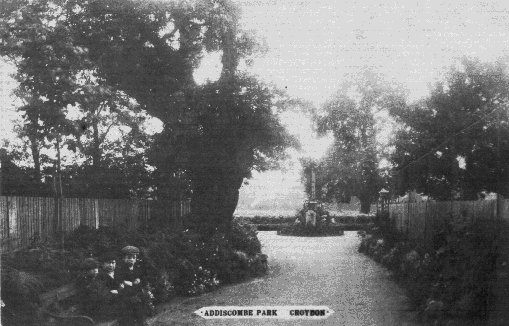
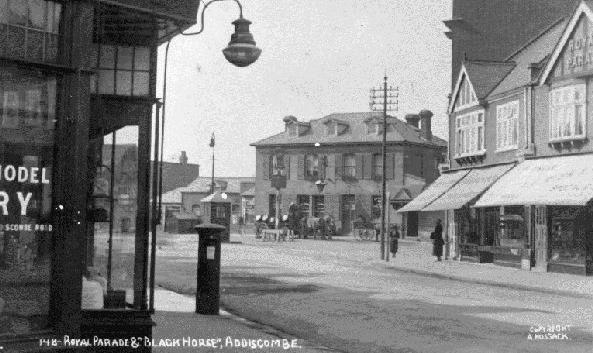
Photographs of Addiscombe past from here

To see the other entries in The Year in Books click here

Friday, 10 October 2014

Some Vintage Knitting Resources

In my journeys around the internet I have discovered some vintage knitting patterns and resources that I thought worth sharing.  Although I knew about Trove*, the free online archive of Australian newspapers and magazines, which contains many free patterns, it was only recently that I came across the collection of digitised knitting books put up by the State Library of Victoria, Australia.  The Australians truly are good to us.

cover1

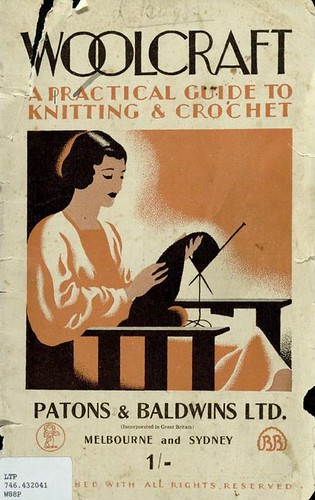
Among the books I have found in the State Library's online collection is the 1933 edition of Woolcraft, a thoroughly useful publication containing a wide range of patterns, particularly strong on socks and baby clothes.  I have started gradually adding the patterns to Ravelry and they can be seen here; it is going to take me a while to get them all up there.  Incidentally the 1915 edition is among a range of books available here.

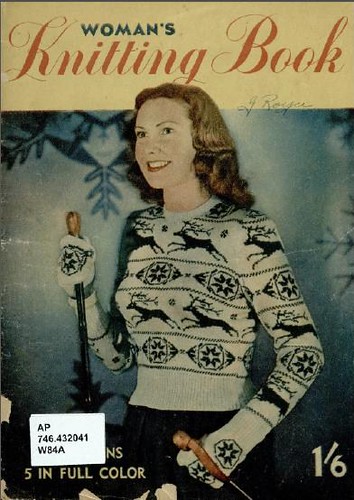
My personal favourite is the 1948 Woman's Knitting Book which features this dashing reindeer jumper on the cover, which unusually for the period is fully charted.  You can see the woman's role in society in flux between the wartime working women, as seen in a knitted suit, "designed primarily for the business girl or traveller" and the 1950s ideal housewives, as seen in a brightly smiling advert for "Raco Aluminium Ware", "Bright Kitchens Happy Homes".  There is a good range of patterns for all the family, including a man's skiing jumper, baby's layette, gloves, cardigans and socks.  I have added the front cover jumper to Ravelry as I thought it might appeal to those looking for a retro Christmas jumper.

woman's knitting book

Given the age of the collection it is unsurprising that there are various booklets of "service woollies" or "knitted comforts", the austerely covered booklet P&B (Patons and Baldwins) Knitting Made Easy from 1941 is part pattern catalogue, with tips on knitting for the forces and a handful of patterns.  There is also a booklet from the Australian Comforts Fund dating from 1940 and a booklet from department store Coles, Knitting for the Forces.

The last item I will mention for today is the Viyella Nursery Book, listed as dating from the 1940s and containing a great many patterns for babies and children up to five years old.  Some of the patterns are perhaps knitted with finer yarns than we might use today, but a little adaptation could make bigger garments.  There are a great many other baby booklets such as From 2 to 5: 11 smart and practical new styles, Smith's Ideal Baby knits and Toddler knits and Baby Knitting 6 months - 2 years.  Also included are a great many baby books by a lady called Ella Allan but I shall go into them in another post.

I hope you enjoy these resources as much as I have been.

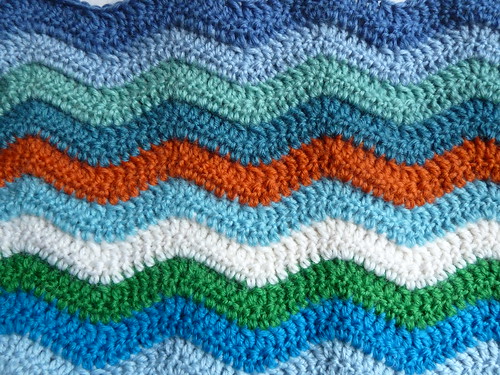
P.S. My crochet blanket is making slow but steady progress.
P1040286

*There is a Trove group on Ravelry whose members have been doing an amazing job of locating patterns and adding them to the pattern database.

Monday, 29 September 2014

The Year in Books: September

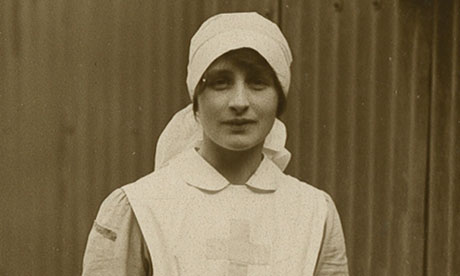
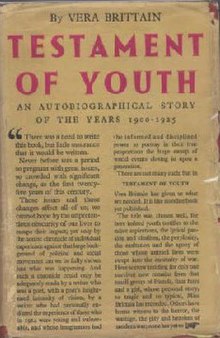
During the commemorations for the centenary of the First World War last month I decided that I should re-read Vera Brittain's memoir Testament of Youth sooner rather than later.  There was, of course, the usual trepidation one feels when approaching a book one first read as a teenager, but I am happy to say that it has more than held up to my memory of it as a magnificent book.  Vera Brittain left Somerville College, Oxford after one year to serve as a Voluntary Aid Detachment nurse (or VAD) during the war and the book covers her life from her birth in 1893 until 1925, when she married.  Testament of Youth is particularly valuable in giving an impression of the state of mind of the British in the run up to the war, throwing some light on why it was such a cataclysmic event and so very shattering to those who lived through it.


The first clue to this is given in the preface written by her daughter, the politician Shirley Williams, who writes that one reason we are so haunted by the war is, "the total imbalance between the causes for which the war was fought on both sides, as against the scale of the human sacrifice".  Brittain's account of the parts of the line, in the early part of the war, where neither side could see the point in killing one another and so had a small voluntary truce, shooting into the air and no man's land, is just one illustration of this point.  Why this war in particular has caught our collective imagination and is such an important part of our collective story is a question I have often pondered.  Our collective remembrance of war is still, a century on, so strongly shaped by the First World War, with our Remembrance Day poppies and our misty-eyed reading of Rupert Brooke and "age shall not weary them".


Brittain's book is a true help to understanding this question, by providing a solid pre-war background she is able to show how shattering the war was to her generation.  There seems to have been a deep complacency and belief in progress, running alongside a belief in the spiritual good of war, testing us and even (in a way that would seem shocking to a post-1945 audience) purging the population.  Brittain's account of attending speech day at her brother's public school in July 1914, with its military manoeuvres, shows the incredible militarism of the pre-war public schools, whence came most of the politicians and leaders of Britain.  The Arnoldian* curriculum of Officer Training Corps, sport and extensive study of Classics** lent itself to a romanticised, spiritual view of war; it is after all a small leap from the Pass at Thermoplyae to the poetry of the early part of the war.  However, these ideals failed to live up to the realities of trench warfare where death came at random from a shower of shells and bullets, killing indiscriminately the strong with the weak.

Testament of Youth has more than lived up to my teenage memories, it is an epic read, but not only is it worth reading, it is engrossing, so that you do not realise that you have somehow read a hundred, or two hundred pages.  According to the biography of Brittain at the beginning of Testament of a Generation (a collection of her and Winifred Holtby's journalism) she found the book extremely hard to write, but I am immensely glad she persevered.  I cannot recommend this book enough, do go and read it, it will enrich your understanding of the First World War immeasurably, but you will also spend time in splendid company.


Incidentally, reading Testament of Youth alongside Testament of a Generation has provided an interesting counter-point and each has cast some light on the other.  Aside from the impression that feminism has not advanced that far from the 1920s and that in politics little changes, each book has provided flashes of insight that have illuminated aspects of one another.  I was particularly interested to read an article discussing, in 1929, calls for the abolition of Remembrance Sunday, some apparently feeling that 11 years was quite sufficient to have remembered the war.  Likewise her horror at finding her children's nanny fixing a poppy on baby Shirley's cot for Remembrance Day throws light upon the gulf Brittain felt between her generation and the one that followed it; for her the poppy was a symbol of war and grief, but for her young nanny it was another "flag day" like any other.

You can see the rest of The Year in Books entries here

*Dr Arnold of Rugby School, whose reforms set the pattern for public schools in the 19th century and whose influence is still felt today, cf. Tom Brown's School Days
**Many of the texts studied were decidedly martial in flavour such as Homer, Thucydides and Caesar

Saturday, 30 August 2014

Coronation Stitches

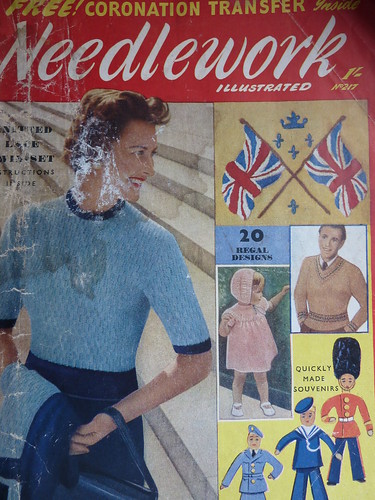
Once again I have ventured onto eBay, that dangerous treasure store, and emerged with a copy of the March 1953 edition of Needlework Illustrated, published by Weldon's, an edition intended to help its readers make their Coronation souvenirs.  The front cover is brightly adorned with knitting, embroidery and wonderful little felt toys of a soldier, a sailor and an airman.

P1040088

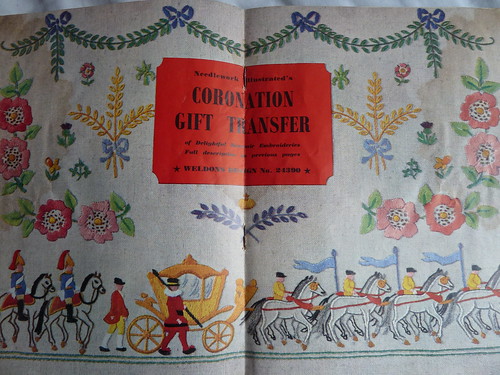
The centrefold contains a wonderful double page colour picture of the embroidery transfer of the month (which is still extant with the magazine), with the Coronation coach and horses processing across the bottom. It would still make an attractive embroidered cushion or wall picture, I rather think my embroidery skills would need work first though!

P1040106

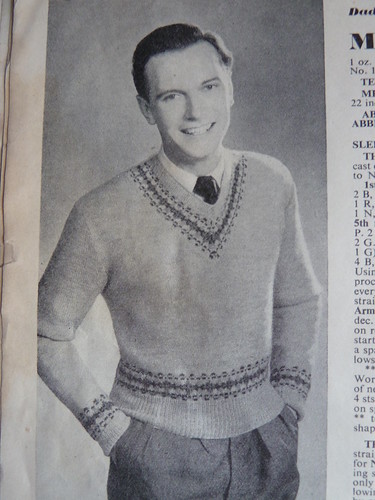
Naturally I was most interested in the knitting patterns; it was one of those, for a man's jumper with a Fair Isle border, which interested me in the first place.  It is the sort of jumper I could imagine my father wearing, though hopefully he would accept it in a colour other than fawn, as I do not relish acres of stocking stitch in fawn!  The accent colours are red, green and blue, rather than the red, white and blue I would have expected.  Elsewhere there are a couple of women's patterns, including the twin set from the cover and a very sweet dress and bonnet set for a toddler.  The yoke of the dress is knitted in the round on a circular needle, which is earlier than I had previously come across their use, certainly in a mainstream British knitting pattern.  However, I did then wonder why the skirt of the dress was knitted flat in pieces.

P1040105

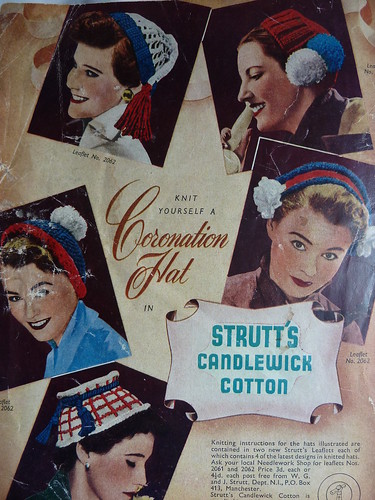
Other features include table mats, some small items for gifts or bazaars - including a charming kangaroo sewn in felt and a crocheted tea cosy in an "Elizabethan" design.  In addition there is a schools' page with a simple embroidery design and a small piece at the bottom advertising Weldon's historical costumes for pageants, as seen in Weldon's Fancy Dress, price 1 shilling.  As in any old magazine the adverts are fascinating, mostly related to needlework, as you would expect and include holiday guides, knitting machines, children's clothes, fabric remnants, embroidery cloth and threads, knitting wool and a postal dress making course.  The best of the adverts is, of course, on the back cover and is for a series of Coronation Hats in Strutt's Candlewick Cotton. Many of the designs look more to me like something a French Revolutionary would have worn to man a barricade and the thought of them made in the same material as those old Candlewick bedspreads such as my grandmother used to have makes my mind boggle!

P1040109

Anyhow, there we have it, a small piece of social history.

Tuesday, 29 July 2014

Knitted Novelties

We all have our chosen mode of distraction when things are hard, some watch TV, read or play computer games: this past week or so I have been taking refuge in the world of vintage knitting patterns.  I have won two EBay auctions and had a lucky time in a charity shop; I am now forbidding myself to look at EBay again - it's a dangerous place!

P1040062

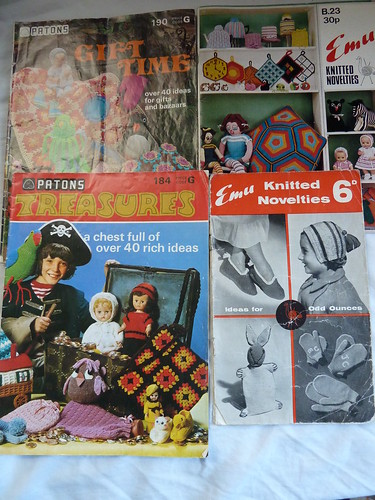
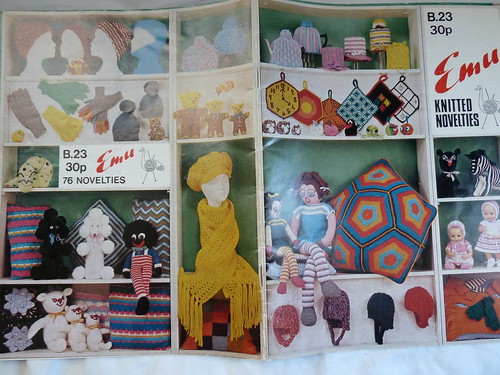
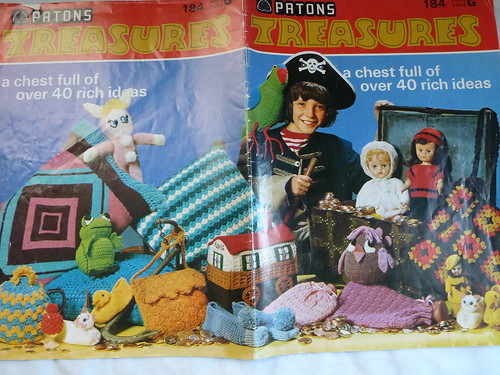
Knitted novelty or "Odd Ounce" books seem to appeal to me particularly, they are not only a source of knitting patterns ranging from useful to bizarre, they are also a piece of social history.  Knitting novelty items seems to go back as far as there were women with time on their hands for "fancy work", such as this fabulous knitted pineapple bag Franklin Habit has written about and the booklets I have been collecting are descendants of such patterns.  The proliferation of fund raising fĂȘtes and "fayres" increased the need for women, who mostly ran such events, to make these items.

P1040065

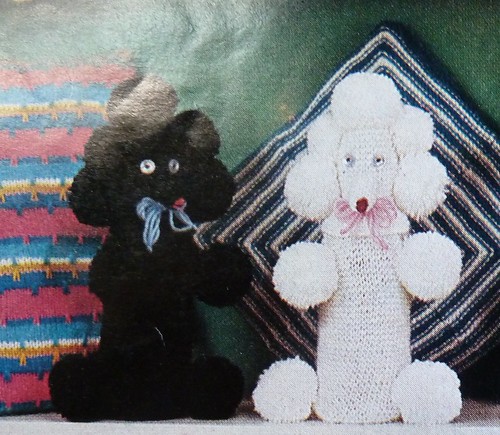
The majority of the items are of household utility, in a fancier form, such as tea cosies, cushions and pot holders in various guises.  Hats, scarves, gloves and bed-socks are popular items, all entering the category of "useful presents".  There are also toys and frequently dolls' clothes.  Then there things one could class as true novelty items, golf club covers, toilet roll covers and poodle bottle covers.

P1040063

Yet at the same time these booklets represent a something of the constriction of the lives of many women, unable to undertake paid work because of marriage.  While the absurdity of many of the items amuses me, there is also behind it a sense of the need to fill in empty hours, even in the comparatively liberated 1960s and 1970s (when the booklets in my collection were published), in lieu of more useful work.  This is not to disregard the money that was undoubtedly raised by the sale of such items for charity.

P1040064
I was particularly taken with the parrot when I spotted this one in a charity shop!

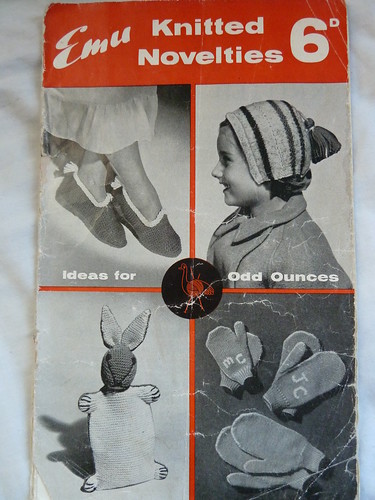
Some of the patterns I could see myself making, such as the rabbit hot water bottle cover on the front cover of the oldest booklet in my collection, others, such as the poodle bottle covers I will be giving a miss.  The current trend for vintage has even led some companies to republish some of these books, such as this one (even featuring a knitted pineapple tea cosy!) and this one from Patons, although many are still available relatively cheaply second hand.

P1040067

Apologies for the quality of photographs in this post - the paper is quite shiny on most of these booklets making it tricky.

Saturday, 14 June 2014

Bosham in pictures

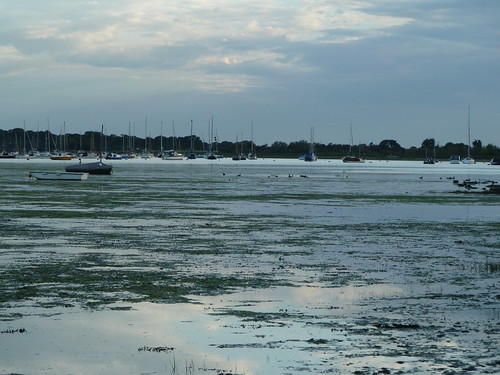
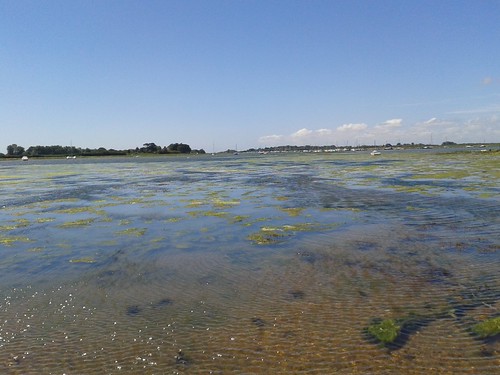
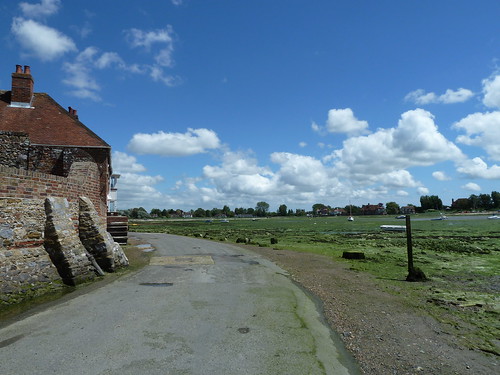
Now I am home with technology I can get to work I will now post some pictures of Bosham, a place that is very photogenic indeed.  There is a strong sense of history in the area, King Canute lived there and reputedly did his famous bit with the waves there (reputedly!) and Earl Harold set off from there on the trip which resulted in him getting ship-wrecked on the coast of Normandy and changed the course of British history.    But like so many of our picturesque and truly beautiful villages and towns, its prosperity peaked early, meaning that it escaped later development.  In the Roman period it was an area of industrial and trading activity and Fishbourne Palace is at the head of the next inlet.

P1030977

When I first stepped out of the village street onto the harbour front I was blown away by the sheer sense of space, a great expanse of air and sky, it made me realise just how shut in towns can sometimes feel.

P1030975

20140610_115926

20140610_115930

P1030903
The old mill...

P1030902
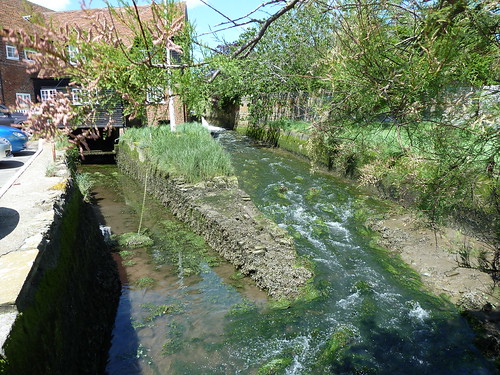
...and the millstream (which also ran down the side of our cottage) joining the inlet.

P1030905

Saturday, 31 May 2014

The Year in Books: May

Yet again I have left it until the very end of the month to write this, procrastinating and not getting around to things as usual.  Anyhow, here goes: this month's book is The New Woman: An Anthology of Writing by Women, 1880-1918, edited by Juliet Gardiner.  The anthology begins by defining how, “the 'New Woman'... with her demands for education, economic independence and sexual equality – and soon for the vote – offered a challenge and a threat to the established order” and outlining the debate surrounding the term.
Next the anthology turns to a discussion of education, which was (and is) a vital building block of progress for women and what the purpose of women's education should be: would it make her discontented with a married life of domesticity? This question of education also impinged on marriage and the expectations brought to marriage.  As Sarah Grand wrote in her 1888 novel Ideala:
“The girl has been taught to expect to find a guide, philosopher and friend in her husband. He is to be head of the house and lord of her life and liberty, sole arbiter on all occasions.”
But many women found that this was not so, how could it be? The same piece goes on to discuss the need for an equality in marriage and makes the wonderful comment that once women have secured higher education for themselves they should work to secure it for men! Many of the writers condemn the economic dependence in which marriage placed women and the problems faced by those who did not or could not marry. In order to pay men a “family wage”, women's wages were generally half that of men's wages, meaning that “the wages paid to women were barely sufficient to sustain independent life”.  The Women's Dreadnought records in October 1924 that qualified women typists and bookkeepers could be expected to work for as little as 4 shillings a week, meanwhile other women engaged in war work could earn as little 6 shillings a week working ten hours a day, six days a week plus overtime.

LSMW0003
Students in a lecture at the Royal Free Hospital in London

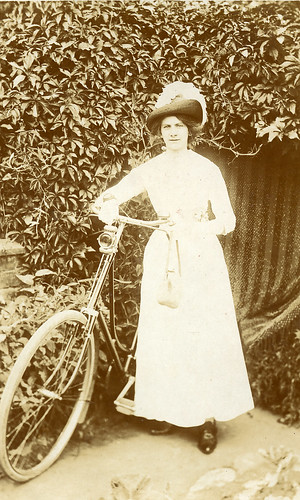
Naturally there is a long section on the fight for the vote, but what this book illuminated for me was that what the women of this period were fighting for was much more than just the vote. I studied women's rights in history lessons at school but the late Victorian and Edwardian period was viewed solely in terms of “Votes for Women”. This book demonstrates that these women were fighting for rights in every field of life, true the vote was crucial, so that women could no longer be “safely neglected” by the male Parliament and have a say in the laws being passed, but the suffrage movement was part of a wider movement to bring women education, equality, respect and freedom. This anthology does what any good anthology does, introducing the reader to a wide range of voices, some familiar, some new, around a subject, providing insights and debate; I most highly recommend it.  It is not all serious, there are some moments of levity, such as Ethel Smyth's account of learning to bicycle on the gravel sweep outside Lambeth Palace and teaching the Dean of Windsor how to ride.  I exhort the publishers to re-issue this book, because it is an excellent read and because the issues discussed within it are sadly still relevant, as is shown by websites such as Everyday Sexism.  It is still available second hand mercifully, I came across it in our local library, the place I have discovered so many of my favourite authors.
Edwardian lady with her bike

I leave you with this forceful argument about the very nature of woman and an interesting counterpoint to Rudyard Kipling's famous poem.

If, after four or five generations of freer choice and wider life, woman still persists in confining her steps to the narrow grooves where they have hitherto been compelled to walk; if she claims no life of her own, if she has no interests outside her home, if love, marriage and maternity is still her all in all; if she is still in spite of equal education, of emulation and respect, the inferior of man in brain capacity and mental independence; if she still evinces a marked preference for disagreeable and monotonous forms of labour, for which she is paid at the lowest possible rate; if she still attaches higher value to the lifting of a top hat than to the liberty to direct her own life; if she is still untouched by public spirit, still unable to produce an art and a literature that is individual and sincere; if she is still servile, imitative, pliant – then, when those four or five generations have passed, the male half of humanity will have a perfect right to declare that woman is what he has always believed and desired her to be, that she is the chattel, the domestic animal, the matron or the mistress, that her subjection is a subjection enjoined by natural law, that her inferiority to himself is an ordained and inevitable inferiority. Then he will have that right, but not till then.
From Marriage as a Trade (1909) by Cicely Hamilton

As an after note, knitters may find the following poem interesting, although I do not entirely agree with the sentiment, it reminded me of Kate Davies' posts about images of knitting.
Oh it's you that have the luck, out there in blood and muck:
    You were born beneath a kindly star;
All we dreamt, I and you, you can really go and do,
    And I can't, the way things are.
In a trench you are sitting, while I am knitting
    A hopeless sock that never gets done.
Well, here's luck, my dear – and you've got it, no fear;
    But for me... a war is poor fun.
Rose Macaulay, 1915


Tuesday, 20 May 2014

Knitting from the Metropolitan Museum of Art

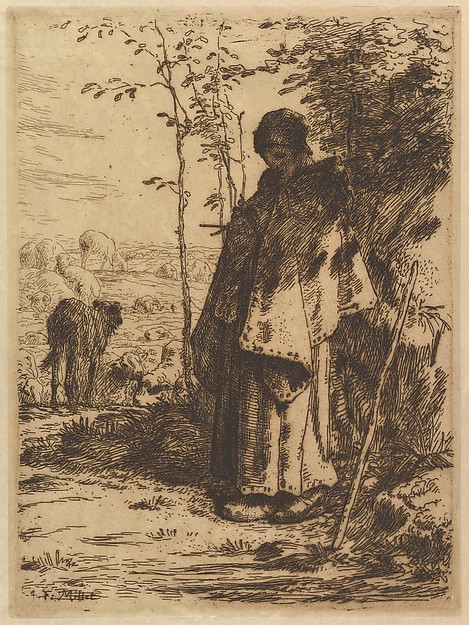
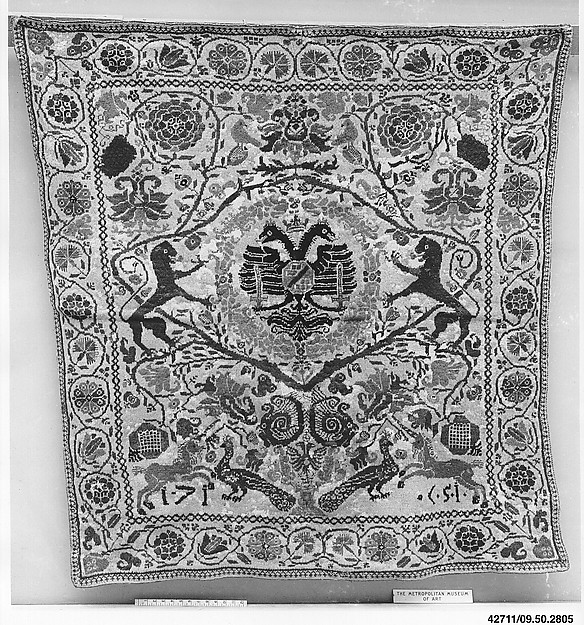
The Metropolitan Museum of Art in New York has just released 400,000 images into the public domain so I have done what any knitter would do - gone to look at the knitting images, below are a few of my favourite finds.

Shepherdess Knitting by Jean-François Millet (1862) - similar to the pictures of Shetland women knitting while going about their work.


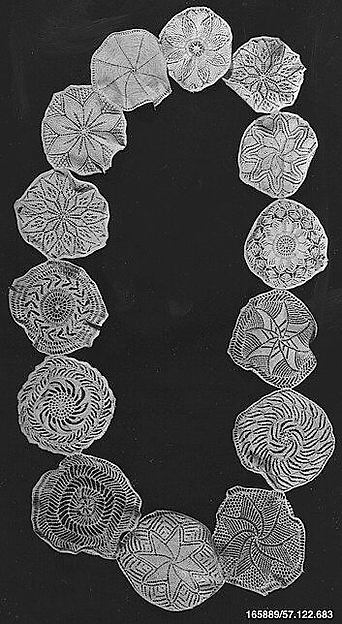
German knitted rug (1751) - according to Richard Rutt's History of Handknitting these were sometimes made as 'masterpieces' as part of qualifying for craft guilds and sometimes for customers.  I cannot imagine knitting anything so intricate!

Sampler, German (nineteenth century) There are more here, incredibly beautiful items.  The V&A in London has a good collection of them too

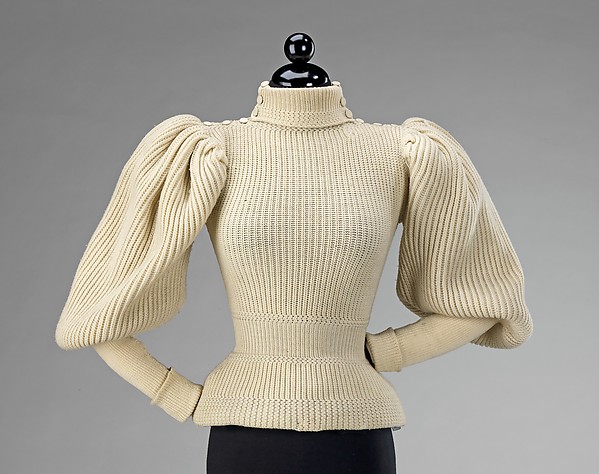
Sweater, American (1895) I could see something like this working today, a very dramatic silhouette

There is vastly more to look through, so much detail of the history of knitting

Wednesday, 30 April 2014

The year in books: April

Squeezing in with only hours of April left to go, I'm so very organised.  This month's book was The Odd Women by George Gissing, which I downloaded from Project Gutenberg.  Published in 1893 it is what you might describe as a progressive novel about the place of women in society, particularly the middle class women who did not marry.  These women were often left in penury with teaching or being a governess the only respectable options for employment, professions for which they were often little suited because they had little education.  Gissing took his title from the population statistics which showed there were around 900,000 more women than men, so inevitably there were going to be an excess of unmarried women.  He uses the novel to rail against the poor education and opportunities available to unmarried middle class women and to argue that all women should be brought up and educated so that they could have a career meaning that if they married they would be better wives and if they did not they would have a means of supporting themselves.  The typewriter is seen as one means of freeing these women from low paid, uncongenial work and two of the main characters are unmarried ladies pioneering the life that is available to unmarried women and training other women in office work.  They appear to see their mission in a similar manner to those rescuing women from prostitution and I think Gissing is suggesting that it is as important a mission.


On the whole this is a rigorous novel of ideas, vividly debated between its protagonists and demonstrated through the lives of the various characters, not one of whom is free of what George Orwell calls "self-torture that goes by the name of respectability".  However, some of the more emotional passages seem rather overblown to modern eyes and are very much of their period, but this does not detract from the interest of the novel and its ideas.  Gissing's view of marriage, as something to be avoided is surprisingly radical for the period and he also discusses ideas of free and equal unions between men and women instead of conventional marriage, something along the lines of "common law marriage" or today's co-habitation.  To some extent this reflects George Gissing's own complicated personal life.

Lithograph of George Gissing by Sir William Rothenstein, 1897

My reading lately has been of books that address this theme of a woman's place and the place of "respectable" unmarried women in society and their poverty, it is one that preoccupies many novelists at least from Jane Austen onwards (although I am sure it predates her) and right on into the 1950s when Doris Lessing's The Golden Notebook, which I have only just started, appears to be asking what place do unmarried women have in society.  In between I have read a short novel by E M Delafield, Thank Heaven Fasting, about a dĂ©butante of the Edwardian period who "could never, looking backwards, remember a time when she had not known that a woman's failure or success in life depended entirely upon whether or not she succeeded in getting a husband".  This novel showed a society in which a woman only had a status in relation to a man, a daughter, a fiancĂ©e, a wife, a mother, a widow and of these "wife" was far and above the most important status.  The dĂ©butante is treated as a child and her mother's emotional collapse upon her father's death shows how far her status is affected.

Anyhow, I shall continue with my feminist reading into May and continue through The Golden Notebook, which I have on an audio-book, making it ideal for listening to while knitting.  Perhaps that will be next month's book and perhaps I shall write about it before the evening of the last day of the month!

Sunday, 10 November 2013

Remembrance

Today is Remembrance Sunday, a day I approach with mixed feelings, as I had more ancestors in the German and Austrian armies than the British in the first world war, my maternal grandparents being of German, Austrian and Czech extraction.  My paternal grandfather's brother fought in and survived the first war and his sisters nursed, but it is still a day that makes me feel my mixed heritage more keenly than normal.  Although it is a day to remember the dead of all nations and of all wars, the first and second world wars do tend to dominate in this country, partly, the cynical historian in me thinks, because we won both wars, but also because Remembrance Sunday was founded in response to the widespread grief following the first war.

However, my ambivalent feelings are increased because Remembrance Sunday seems to be focussed on the soldiers who fell in the wars and of course should be remembered and mourned. But meanwhile the civilians, who also died in great numbers, seem forgotten.  I feel this personally as somewhere in the region of three-quarters of my paternal grandfather's family died or disappeared as civilians, whole families vanishing in their entirety, in the Holocaust during the second world war.

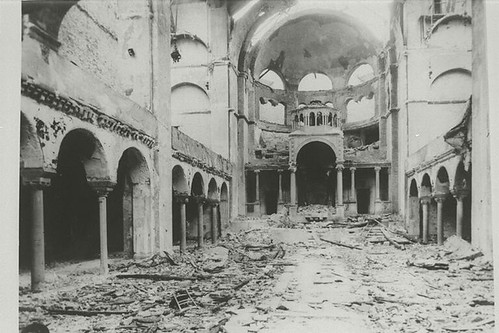
Interior view of the destroyed Fasanenstrasse Synagogue, Berlin, burned during the November Pogroms
From a synagogue destroyed in Berlin on Kristallnacht Flickr Commons

This year Remembrance Day falls on the 75th anniversary of Kristallnacht when the Nazis attacked Jewish people, homes, businesses and synagogues in Germany and Austria in reprisal for the killing of a German diplomat in Paris by a Jewish youth.  Ninety one people died and 30,000 were sent to concentration camps, but it marked the beginning of the Nazi "final solution".  My grandfather and his mother were lucky, they got out, my grandfather on the last train he could legally have got; his father and most of the rest of his family were less lucky.

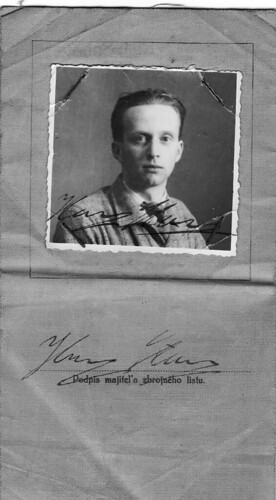
dad ID 1935 czech
My grandfather in his 1935 Czech passport

These events and the sense of loss they created have cast a long shadow across my family.  We need to remember all who have died or suffered loss on all sides, and never to allow remembrance to become glorification of war.  Although on the last point I think this ex-serviceman, writing in the Guardian puts things better than I can.  When I hear the jingoistic writing from the beginning of the first war repeated again and again by politicians, the media, social media, as part of remembrance day I shudder inwardly.  One might as well repeat the last line of Wilfred Owen's Dulce et decorum est and omit the all important context, of "the old lie".

And for the future?  We need to keep talking, keep telling the stories, try to stop ourselves repeating the same mistakes again and again.  We need to make sure our remembrance does not become justification for current or future war and work and pray for peace and reconciliation and healing.

Father forgive us our follies, grant us peace, comfort those who mourn, help us to love mercy and seek justice and walk humbly before you.

I leave you with Michael Tippett's Oratorio A Child of Our Time, which was written in 1939 in response to Kristallnacht.

Tuesday, 8 October 2013

The Right Time To Begin

You may, or may not, have noticed that this week is Shetland Wool Week, which is being marked in Shetland by a variety of events.  Entirely co-incidentally this is also the week that I have made a start on the Fair Isle sweater my dad has wanted for ages.  He is one of the most knit-worthy people I know, not only wearing the things I make him but also showing them off to all and sundry and taking care of them.  His love of being knitted for is life-long and he has not quite got over his mother switching from knitting for him to knitting for his nieces and nephew when he was in his late teens.  Although he later made up for this by getting his grandmother-in-law to knit for him, a mutually beneficial relationship as she loved having someone to knit for.

P1030547

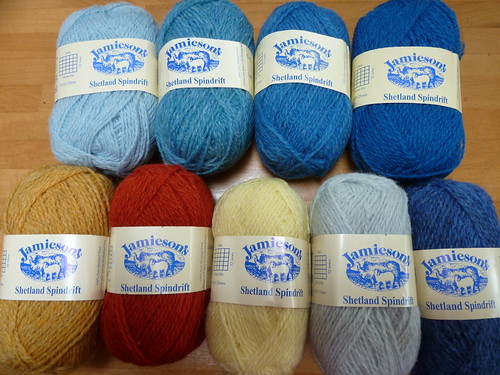
After a day spent studying the Jamieson's of Shetland spindrift colourcard, a thing of beauty in itself, until I was in a whirl of colour, I eventually picked out my colours, with some trepidation in case they did not work out.  Mercifully they do seem to work, bright and colourful without being too "in your face" or garish.  I wanted colours that had some tradition behind them, but that avoided the beige background of many Fair Isle sweaters.

P1030583
Swatch

I have put together motifs from an old picture featured in Michael Pearson's book Traditional Knitting, which he had helpfully charted, together with a variety of peeries, some from the original sweater, some from Alice Starmore's invaluable Fair Isle Knitting.  Michael Pearson's Traditional Knitting was a library find and the book that first got me interested in the knitting of the past.  For the charts themselves, rather than spending hours hunched over graph paper, I found some excellent software online called KnitBird, which is charting software for both colour work and textured or lace knitting and allows you to flip and repeat motifs among other handy features.  The finished charts look professional and polished too; I'm pleased with it, well worth the money.

So now all I have to do is knit it.  I began yesterday and am something just over an inch through the ribbing.  Here goes... I may be some time.

The Ravelry project page is here and has details of which colours I am using.

Wednesday, 22 June 2011

The Gentle Sex

This afternoon I was able to indulge in spending the afternoon watching a black and white film, something I have always enjoyed doing. On this occasion Film 4 were showing a second world war propaganda number called *The Gentle Sex", which used seven women's lives to show the contribution women were making to the war efforts.

Like many such propaganda films of the period it was well made, well acted, and although it was no Brief Encounter it was engaging and gently educative. The periodic "set speeches" in which characters earnestly discussed the themes of women's role in the war and what the war was fundamentally being fought for did jar at times, and with the hindsight we now have over the seventy years that have elapsed since then gave some of their idealism a tragic irony. Despite the horrendous ills of Nazism, their defeat has not, alas, meant that the world has become necessarily a better place; new sources of evil have sprung up. Truthfully no human war could end evil in the war, it is too deeply in ourselves.

However, the film was right that the war would change women's place in society, it did, perhaps not quite as far as the idealists would have liked, but like their mothers in the first war, they had an impact. I liked the film's emphasis on how women were needed to win the war, were essential and showed them working alongside men in a variety of occupations: manning anti-aircraft guns, driving and mending lorries, working capably and hard.

So... why then, after a stirring finale showing our heroines helping to shoot down an airplane, were the closing credits presented the form of a cross stitched embroidery? I found the juxtaposition interesting and frankly startling. Perhaps one could argue that they were comparing women's peacetime, decorative, fairly useless role and occupation with their wartime, utilitarian, essential role? Perhaps it was just a lazy way of demonstrating the film's feminine subject matter? Certainly in that portion of the film I saw no woman embroidered anything, though many knitted and this is by no means the first time I have seen knitting stand for the new role in society that the war had given to women. For example, in Daphne du Maurier's 1943 play The Years Between there is a contrast made between the main protagonist's pre-war embroidery, when she was "just" a wife and wartime knitting, when she is active in politics. Interestingly du Maurier's play was written in the same year as this film was released and both share a pre-occupation with winning the peace as well as the war.

To the women of World War II

One could question why this film was felt necessary in the first place, but then to expect women's role automatically to be considered as important as a man's, particularly back in the 1940s, is perhaps to be as hopelessly idealistic as the film's characters were about the purpose of the war. Its very title says a great deal about the attitudes the film was seeking to challenge. To an audience today the sight of a woman in military uniform is everyday; in 1939 it still had the potential to shock, although as the film points out, through the memories of an elderly lady of driving an ambulance in the first war, women taking an active, rigorous role in war was not new to this conflict. Yet the contribution of these women to the war effort is still little discussed and it is only comparatively recently that any kind of memorial to them was erected in London, so perhaps this film should have shouted louder?